Microsoft Build 2026: The Governance Shift, On-Device AI, and Agent-First Devices
Build 2026 was not short on announcements. Microsoft covered Windows, Edge, GitHub, Azure, M365, devices, and models in one sweep. The interesting thread across all of them is governance and control. On-device AI, agent sandboxing, evaluation layers, and desktop control centres are all versions of the same idea: capability is easy. Containment is the hard part.
Windows as the trusted developer platform
Microsoft spent the opening of Build reinforcing the message it has been shaping for months: Windows 11 is not legacy. It is the host layer for modern development. That includes Coreutils on Windows, WSL containers, dev environments set up with WinGet, and an Intelligent Terminal that brings agentic assistance into the shell. The practical point is that developer friction is being treated as a security and productivity risk, not just a convenience issue.
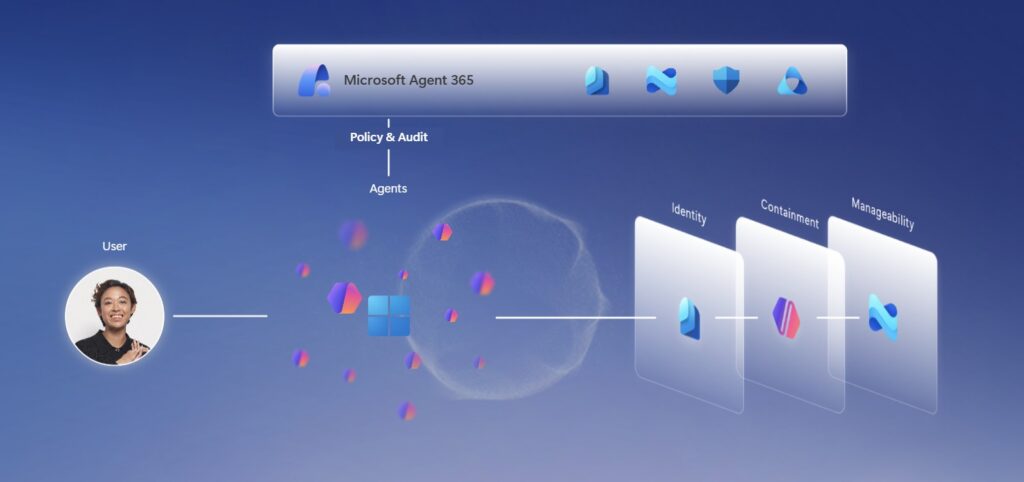
The bigger signal is OS-enforced identity and containment. The MXC SDK gives agents declared access boundaries enforced at runtime. Agent 365 ties that to Defender, Entra, Intune and Purview. OpenClaw runs contained on Windows. NVIDIA OpenShell does the same. This is Microsoft saying that local agents are only acceptable when the OS can constrain them.
The governance angle matters here. Windows 365 for Agents puts the same containment story into Cloud PCs. That means the same policy model applies whether the agent runs locally or remotely. For enterprise teams, that removes a classification problem that usually ends in accidental over-permissioning.
Source: Windows Developer Blog — Build 2026: Furthering Windows as the trusted platform for development
Full article: Windows Build 2026: Why the Trusted Platform Matters for Agentic Development
Edge on-device AI
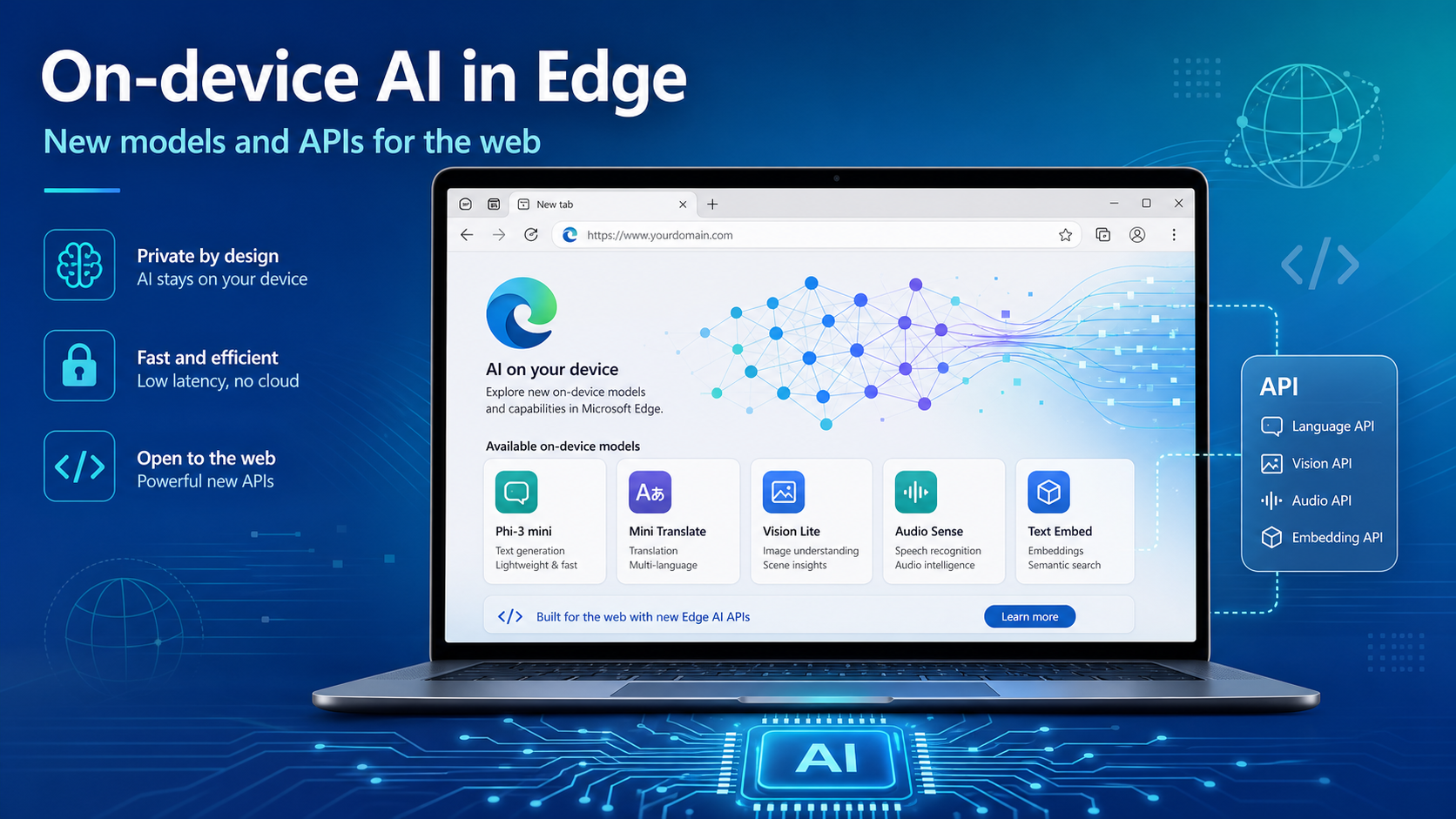
The Edge updates are the quietly important ones. Aion-1.0-Instruct is a smaller on-device model than Phi-4-mini, with better compatibility across lower-spec GPUs and CPUs. That shifts the argument from "AI needs cloud" to "AI needs the right model for the hardware". The Pattern API and Writing Assistance APIs give web developers a concrete path to local inference without shipping model weights themselves.
Language Detector and Translator APIs are more useful than they sound. On-device translation with 145-plus languages, no extra cost, removes a dependency on cloud round trips for content that does not need to leave the machine. Speech recognition via the Web Speech API is still experimental, but the hybrid on-device plus cloud fallback is the right design.
Source: Microsoft Edge Dev Blog — Expanding on-device AI in Microsoft Edge
Full article: Edge Build 2026: On-Device AI Is Not a Backup Plan Anymore
GitHub Copilot app

The GitHub Copilot app is a desktop control plane for multi-agent work. The core idea is simple: if you have three agents running in parallel, you need one view showing active sessions, issues, pull requests, and background automations. The old workflow of tab-to-tab context hunting does not scale when agents are producing code, reviews and plans simultaneously.
Every session runs in its own git worktree, so parallel agents do not overwrite each other. That is not a nice UI detail. It is a correctness guarantee. The app pulls context from connected repos, issues, and pull requests, which means the agent starts with something closer to situational awareness instead of a blank prompt.
Source: GitHub Blog — GitHub Copilot app: The agent-native desktop experience
Full article: GitHub Copilot App: Why Agent-Native Development Needs a Control Room
Azure Discovery
Azure Discovery is now generally available, with a preview of the Discovery app for local desktop use. The positioning is scientific R&D, but the underlying idea applies everywhere: agentic workflows need evidence preservation, iterative loops, tool coordination, and review processes that mirror how real decisions get made.
I do not run R&D in the same sense as a materials science lab, but the pattern transfers. Internal ops, support triage, content review, policy checking — all of them need the same cycle of hypothesis, execution, validation, and audit. Discovery is Microsoft's bet that agentic AI will only survive inside organisations if it behaves like a governed workflow, not a chatbot conversation.
Source: Azure Blog — Announcing Microsoft Discovery general availability and Microsoft Discovery app preview
Full article: Azure Discovery: Why R&D Agents Need Traceable Workflows, Not Just Chat Interfaces
Project Solara
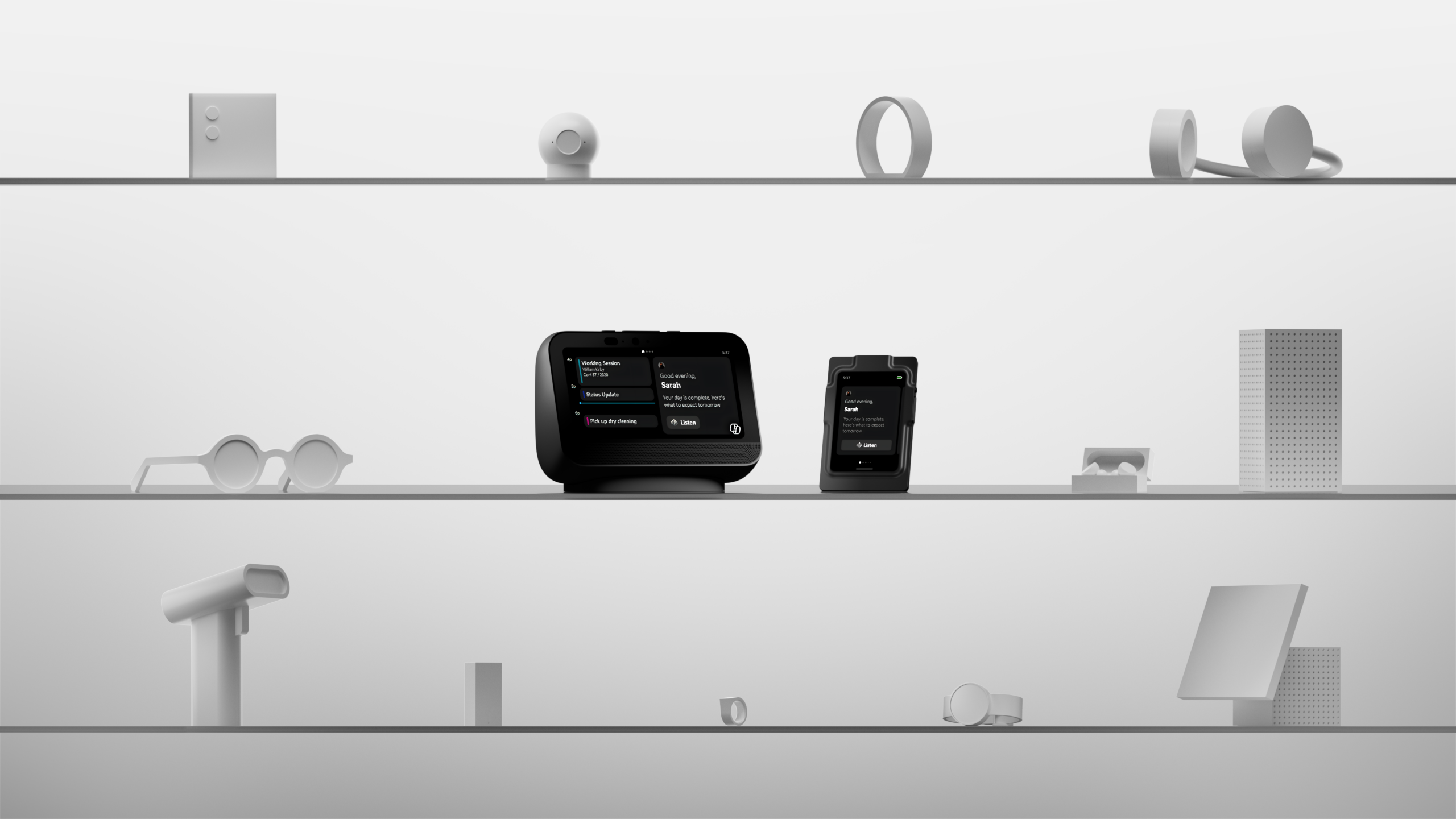
Project Solara is the most speculative part of Build, and the most interesting. It is a software platform plus hardware concepts for agent-first devices. The argument is that agents are becoming a new unit of programming and a new interaction technology. If that is true, the device form factor should change too.
History says specialized computers win specific contexts. Laptops did not replace phones. Phones did not replace watches. Solara imagines a diverse ecosystem of agent-first hardware — different sizes, mobility levels, and professional contexts. That is a platform play, not a product play. Microsoft has not always been successful at platform bets outside Xbox and Azure, but Solara is at least aimed at a real shift in how humans interact with machines.
Source: Command Line — Composing a new platform for agent-first devices
Full article: Project Solara: Agent-First Devices Need a Platform, Not Just a Product
Work IQ APIs

Microsoft announced new Work IQ APIs for M365. These are developer-facing signals about email, calendar, Teams activity, and documents — packaged as productivity intelligence rather than raw user data. That distinction matters. If the data is framed as behavioural signal instead of surveillance, adoption by enterprise customers improves. If it feels like monitoring, the same APIs become a privacy argument.
The use cases are legitimate: adaptive automation, meeting quality signals, workload balancing, and focused-work recommendations. The implementation risk is consent. The governance first principle already well understood at ESA applies directly here. APIs of this kind need clear ownership, access policies, and the ability for users to understand what signals are being acted on.
Source: Microsoft 365 Blog — Announcing the new Work IQ APIs
Full article: Work IQ APIs: Productivity Signals Are Useful Only If They Are Governed
MAI models
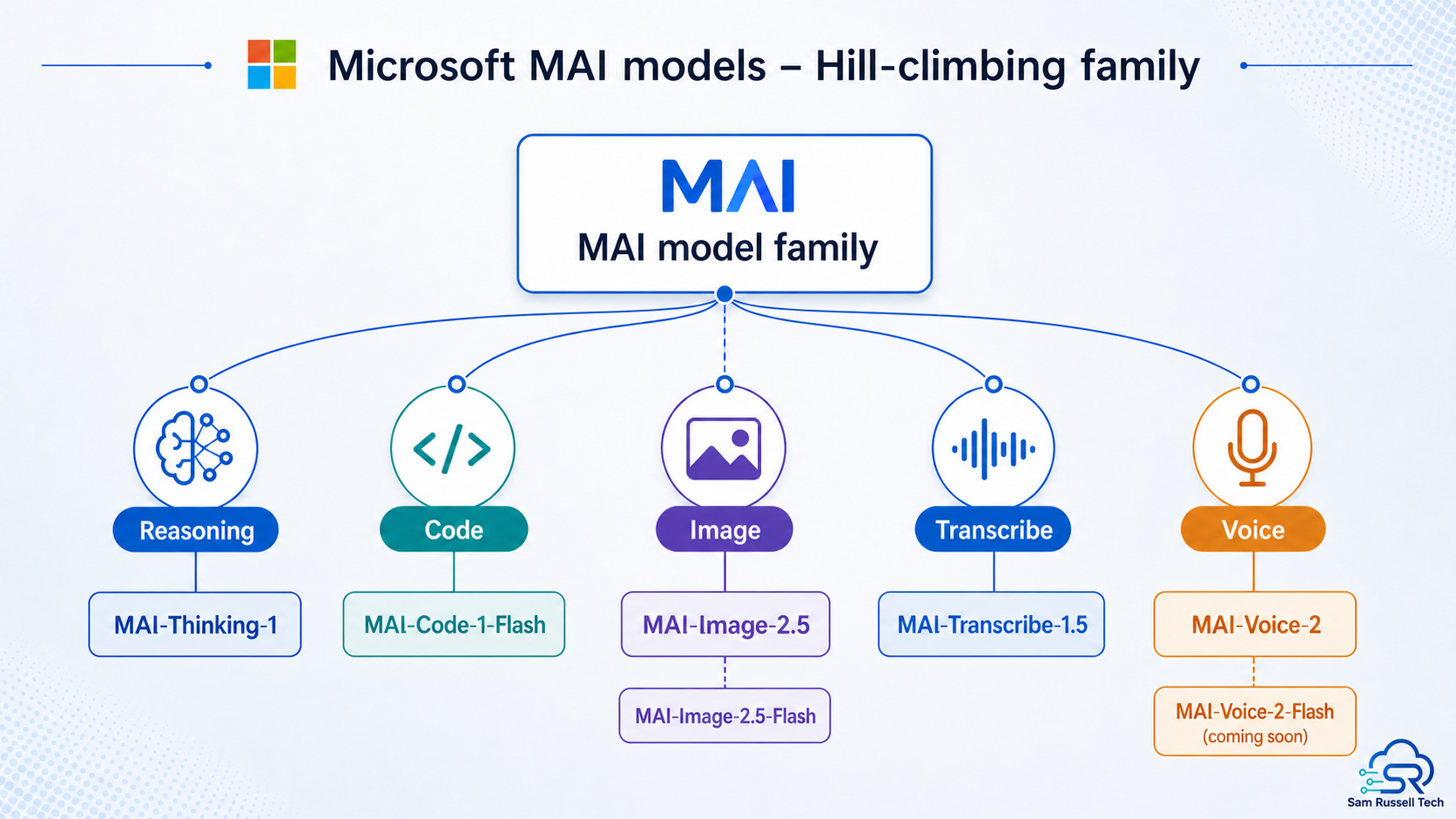
Microsoft launched seven new MAI models at Build. The headline names change faster than most teams can evaluate them, but the direction is clear: small, specialised, and cheaper to run. The models are positioned against the assumption that bigger equals better. In production, smaller models often win when latency, cost, and compliance with data boundaries matter more than benchmark scores.
The thing to watch is not the announcement. It is the versioning story. Model swaps are easy to start and hard to control. Evaluation, rollback, and access policy are the parts that make model choice safe. That is where Azure AI Foundry and the Agent Governance Toolkit fit. The models are the engine. The governance layer is the steering.
Source: Microsoft AI — Building a hillclimbing machine: launching seven new MAI models
Full article: MAI Models: Why Model Size Matters Less Than Governance
Microsoft Scout

Microsoft Scout is an always-on personal agent inside Microsoft 365. The pitch is ambient assistance: it watches your context, suggests actions, and runs in the background instead of waiting for you to open a chat window. That is also the risk. Ambient agents have access to more data than chat agents because they are present more often.
The governance question is not whether Scout is useful. It is whether users and IT can control what Scout sees, what it stores, and what it acts on. Microsoft has not answered that yet. If Scout is governed by the same controls as other M365 agents, it is a credible productivity tool. If it is a new surface with weaker controls, it is a privacy incident waiting to happen.
Source: Microsoft 365 Blog — Introducing Microsoft Scout
Full article: Microsoft Scout: The Always-On Agent That Needs Clear Boundaries
Windows agent sandboxing
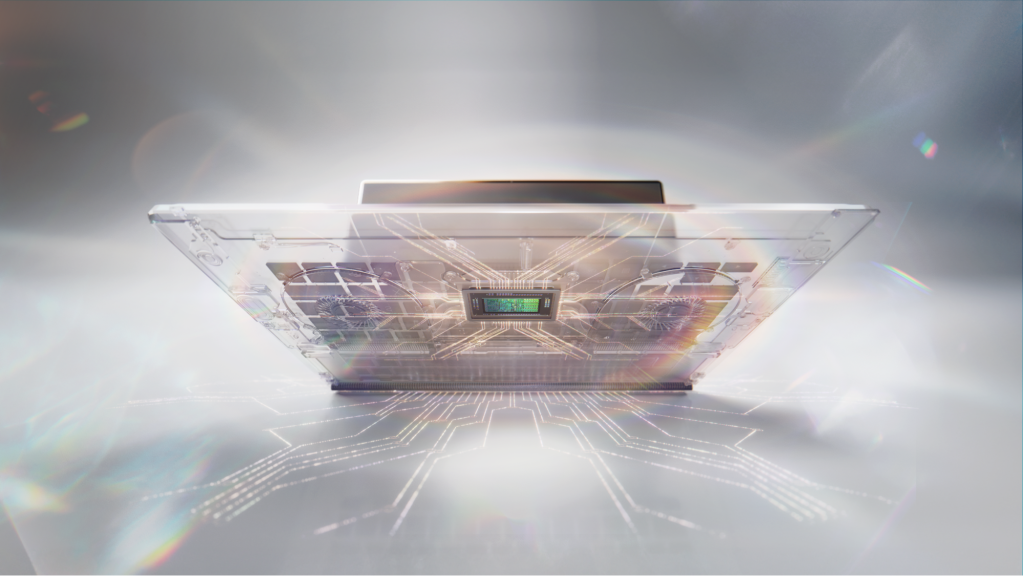
The FirstPost report on Build 2026 covers Windows getting built-in AI agent sandboxing with MXC, OpenClaw support, and NVIDIA OpenShell. The worth noting part is that Microsoft is treating local agents as a security boundary problem, not just a feature problem. MXC gives agents declared access to files, network, and system resources. OpenClaw and OpenShell run on top of that containment layer.
That is the right architecture. The wrong architecture is the one we have had for the last two years: agents with broad credentials, no runtime containment, and incident response after the fact. Microsoft is not completely escaping that legacy, but Build 2026 shows it knows the old model is not acceptable for enterprise.
Full article: Windows Build 2026: Windows Gets Built-In AI Agent Sandboxing
Web IQ
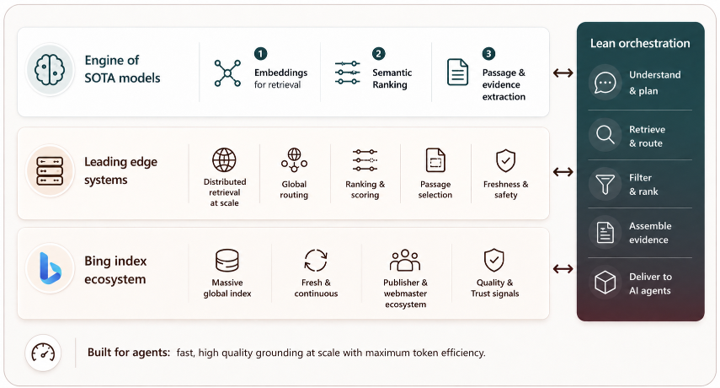
Bing announced Web IQ. The direction fits with Microsoft's broader AI strategy: make search less about keyword matching and more about task understanding. The risk is the same one that faces every semantic search layer. It is only as good as the retrieval quality underneath it, and the signals that decide which source counts as authoritative.
In enterprise, search quality is a compliance and IP issue. If Web IQ surfaces a document that has been superseded, users will act on stale data. If it summarises a policy incorrectly, the error propagates. The governance angle is the same as everything else announced at Build: context-aware AI needs context-aware controls.
Source: Bing Blog — Announcing Microsoft Web IQ
Full article: Web IQ: Why Semantic Search Needs Governance, Not Just Better Retrieval
Learning Agent
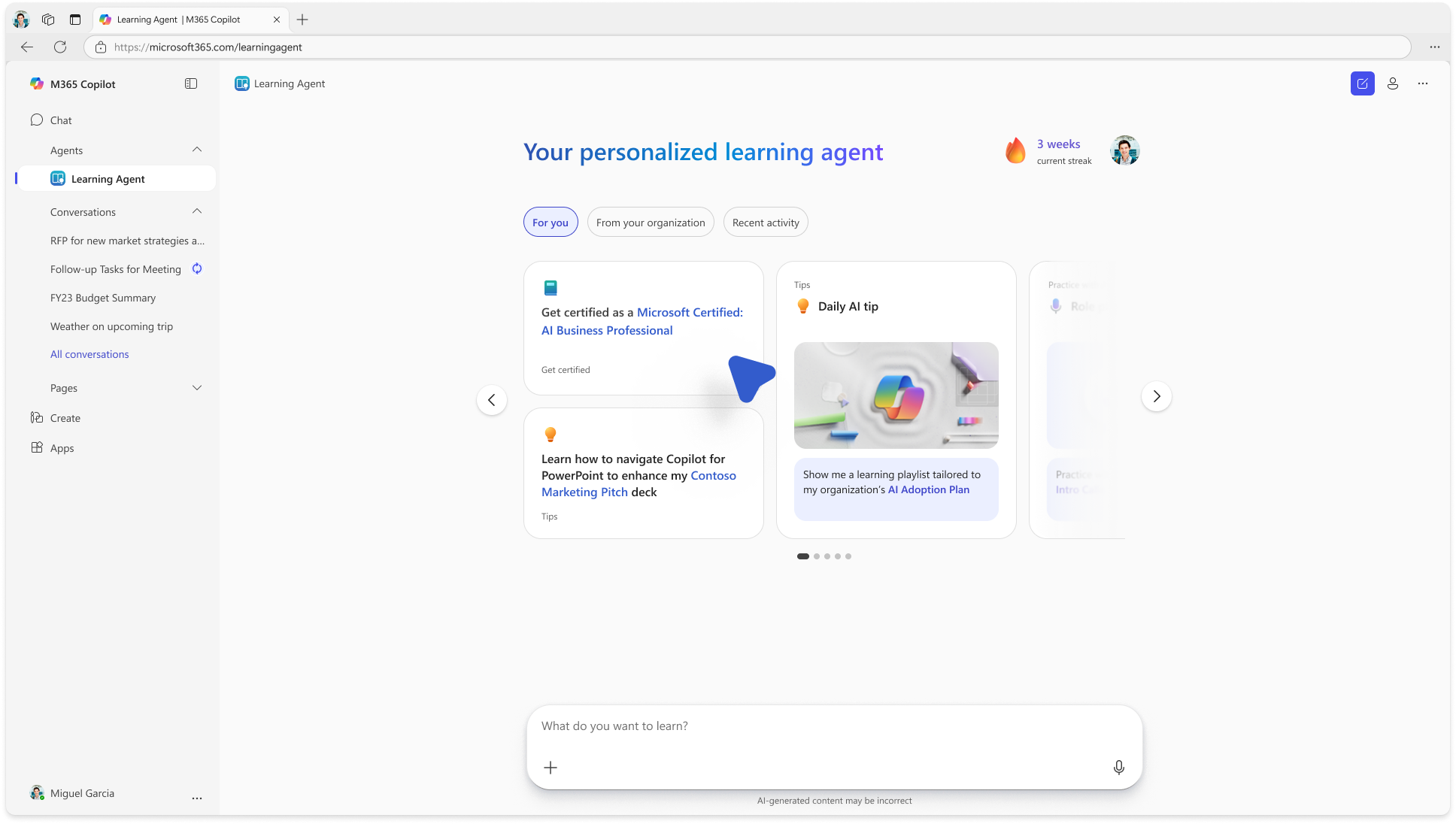
The Microsoft 365 Learning Agent is now generally available. It personalises upskilling paths inside the flow of work rather than sending employees to a separate LMS. The practical advantage is relevance. Generic courses do not stick. Context-aware suggestions tied to the documents, meetings, and tasks a person is already working on do.
The implementation detail worth watching is how much employee data the agent uses to personalise learning recommendations. The line between helpful and intrusive is narrower for HR and development tools than for productivity tools. Governance here means clear boundaries on what employee signals feed into learning profiles, and who can see them.
Source: Microsoft Tech Community — Learning Agent now generally available
Full article: Learning Agent: Why Context-Aware Upskilling Needs Boundaries
Build 2026 wrapped up: governance is the real product

If there is one thread that ties Build 2026 together, it is governance. Every major announcement this week either adds a control surface or depends on one. Windows MXC contains agents. Edge pushes AI onto the device so less data leaves the machine. GitHub gives developers a control room for parallel agents. Discovery wraps scientific workflows in traceable, reviewable loops. Work IQ, Scout, and Learning Agent all need consent and ownership models or they become liability instead of productivity.
I covered that angle directly in my earlier piece on Azure AI Foundry. The short version: the model does not matter as much as the management layer around it. Tracing, evaluation, model choice, permissions, deployment slots, and rollback are what separate a demo from a system a business can actually operate. Foundry is Microsoft's attempt to make that layer native instead of bolted on. Azure AI Foundry: why governance is the real product
What Build 2026 shows is that Microsoft is now applying that same logic across the stack. The pieces are still fragmented. The OS container layer, the browser runtime, the IDE, the cloud fabric, and the agent surfaces each have their own governance story. The difference from last year is that the story is no longer optional. If Microsoft wants enterprises to run agents on Windows, in Edge, through Copilot, and across M365, it has to make the control model coherent. Build 2026 is the first year where that requirement is obvious in almost every announcement.
The through-line
Build 2026 is not about copilots anymore. It is about the layer underneath copilots: how agents are governed, contained, evaluated, and deployed. That is good. Governance is not an inhibitor. It is the only thing that makes agentic systems usable outside demo environments.
For Australian enterprises watching this stack, the priority is the same. Start with ownership, boundaries, and audit trails. Add capability after the controls exist. The tools are improving. The discipline of using them is still the missing part.