MAI Models: Why Model Size Matters Less Than Governance
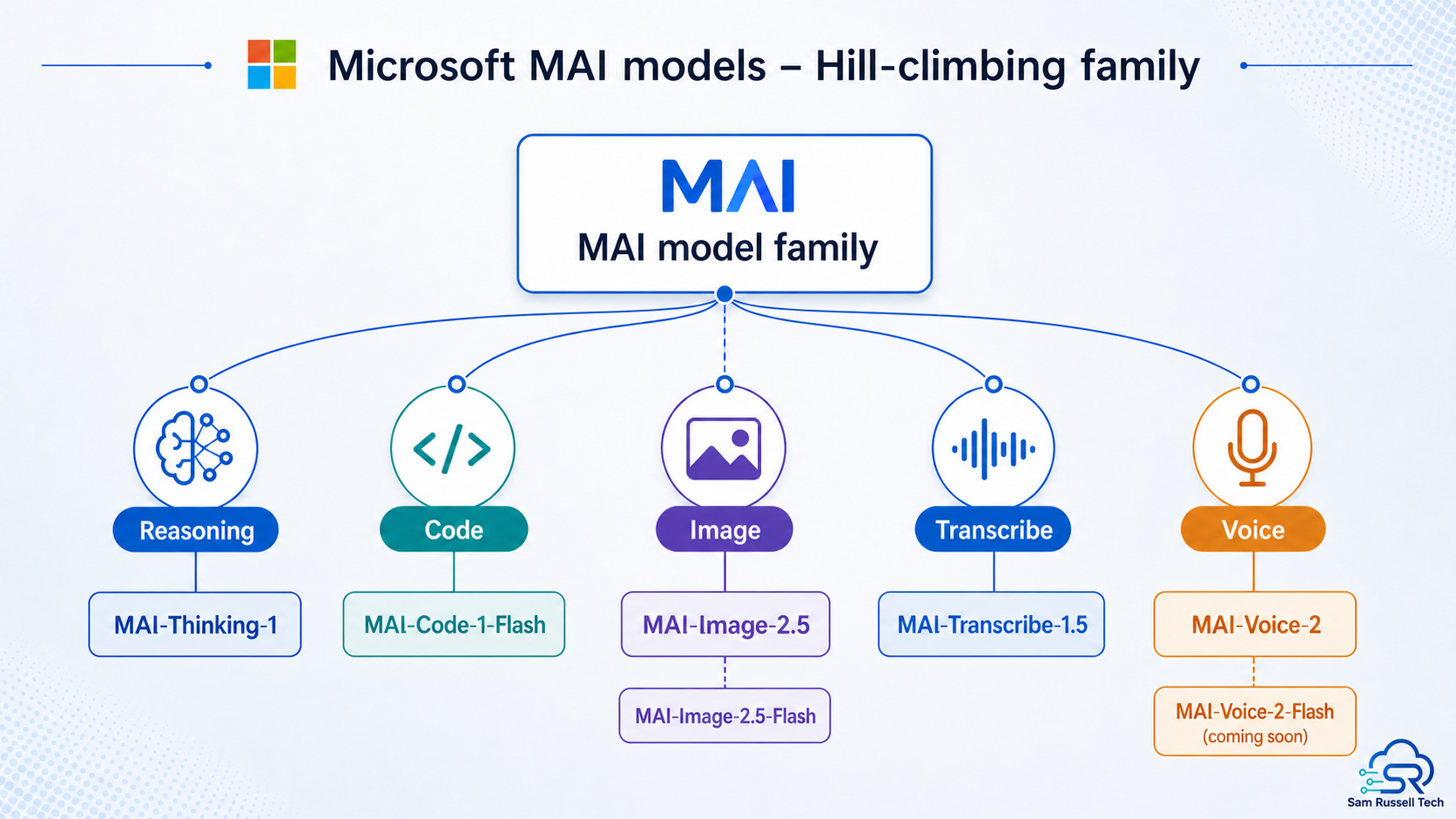
Microsoft launched seven new MAI models at Build 2026. The names change faster than most teams can evaluate them, but the direction is clear: small, specialised, and cheaper to run. That is not a gimmick. In production, smaller models often win when latency, cost, and compliance with data boundaries matter more than benchmark scores.
The shift is away from one dominant model toward a portfolio. Different tasks need different models. Summarisation, classification, extraction, reasoning, and tool-calling each have different constraints. A single model that tries to do everything usually does nothing well.
The versioning problem
Model choice is easy to start and hard to control. Swap one model for another and you change output quality, failure modes, token usage, and latency in ways that are hard to predict. Evaluation, rollback, and access policy are the parts that make model swaps safe.
Azure AI Foundry handles this by treating models as deployable assets with their own lifecycle. Foundry gives you evaluation against your own data, version control for prompts and configurations, and deployment slots that let you test a model before it touches live traffic. The MAI models are the engine. Foundry is the steering.
The enterprise reality
Enterprises do not fail at AI because they picked the wrong model. They fail because they cannot explain why the model made a decision, reproduce the same output six months later, or stop a bad model from reaching production. Governance solves those problems. Model improvements solve performance problems. Both matter, but only one prevents incidents.
For Australian teams evaluating MAI models, the question is not whether the models are good. It is whether your model governance process can keep up with the release cadence. If you cannot evaluate, version, and roll back models safely, more model choices make the problem worse, not better.
Source: Microsoft AI — Building a hillclimbing machine: launching seven new MAI models
Connect with me on LinkedIn.