
Microsoft Leaked Its Own AI Operating System. The Interesting Part Is Not the AI.
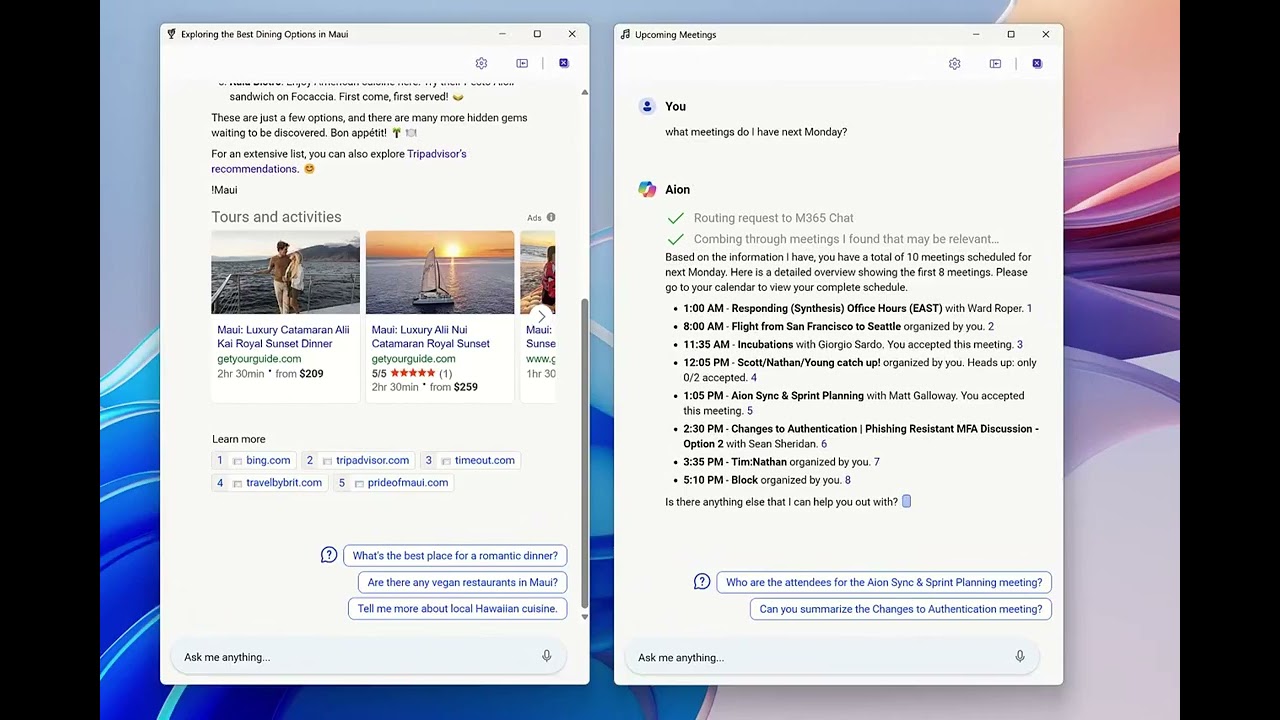
A three-minute video leaked to a Discord server earlier this month shows Microsoft prototyping a lightweight operating system called Aion. The internet called it Copilot OS. The coverage focused on Copilot being built into the shell, which is the obvious headline. The part nobody is talking about is much more interesting: Microsoft built a version of Windows without Win32, and it worked.
The video surfaced on the BetaWiki Discord on July 2, posted by someone with access to internal Microsoft materials. Zac Bowden at Windows Central confirmed with sources that it is genuine, recorded sometime in 2024. Microsoft declined to comment.
What the video shows is a desktop operating system built on something called Win3, a stripped-down Windows codebase that does not support legacy Win32 applications. Instead of running native Windows apps, Aion runs web applications and websites through Microsoft Edge. If you need a desktop app, you remote into a Cloud PC through Windows 365. If you need to find a file, you ask Copilot. If you want to launch something, you type into a multimodal input box. The Start menu is Copilot. The file browser is Copilot. The application launcher is Copilot.
The technical detail buried in all of this is Win3. Microsoft has been trying to shed Win32 backward compatibility for thirty years. Windows RT tried in 2012. It failed because it could not run the apps people needed. Windows 10 S tried in 2017. It failed for the same reason. Windows on ARM spent a decade being a compatibility layer on top of a compatibility layer, and even now it succeeds mostly because emulation got fast enough to hide the problem.
Win3 is different. It does not try to hide the absence of Win32 behind emulation. It removes Win32 entirely and replaces it with something else: a web runtime and an AI agent. That is a bet Microsoft has never been willing to make before. I think the bet works this time because the use case has changed. Nobody needs Photoshop from 1998 on an agent-first device. They need Edge, a web app runtime, and an inference engine. The AI use case finally gives Microsoft permission to break backward compatibility in a way that consumer computing never did.
The Chrome OS comparison misses the point
Every article about Aion compares it to Chrome OS. The comparison is technically correct and philosophically wrong. Chrome OS was an operating system for cheap laptops in schools. Its core insight was that web apps could replace desktop apps for most people. It was a bet on the web platform, not on a new interaction model.
Aion is a bet on the agent as the primary interface. The web-first architecture is an implementation detail. The meaningful difference is that you do not navigate Aion by clicking icons. You tell Copilot what you want and it assembles the experience. The Spaces feature in the video shows where this is heading: the OS groups your apps and sites into task-based buckets that you return to later. It is not a launcher. It is a context manager.
Chrome OS asked: what if the browser was the only app you needed? Aion asks: what if you did not need to think about apps at all?
This explains why Edge exists
For years, the question hanging over Microsoft Edge has been: why does Microsoft maintain a Chromium browser instead of building on its own engine? The answer sat in a 2024 hackathon video that leaked in July 2026. Edge is not a browser. It is the application runtime for Microsoft's agentic operating system. Every web app, every PWA, every Cloud PC session in Aion runs through Edge. The browser is the shell.
Microsoft did not build Chromium Edge to compete with Chrome. It built it to own the runtime for the next version of Windows. That is a multi-year architectural play that looks baffling if you think Edge is a consumer browser and entirely rational if you understand it as a platform component.
Solara is the experience layer. Aion is the platform.
At Build 2026, Microsoft announced Project Solara, an agentic OS experience that generates UI on demand as the user asks for it. Solara runs on both Android and Windows. The Windows Central report speculates that Aion evolved into Solara. I think the relationship is more specific. Aion is the platform layer: the stripped-down OS kernel and the Edge runtime. Solara is the experience layer: the just-in-time UI generation that sits on top. Together they form a complete agentic computing stack that makes Windows 11 look like what it probably is: a transitional product.
Microsoft cannot say this publicly because Windows 11 has 1.4 billion users and they all need Excel to work tomorrow. But the architecture tells the story. The company is building a parallel Windows that does not carry the weight of three decades of backward compatibility. When the agentic computing model is ready, the platform will already exist.
The Copilot problem
There is a risk here that the video does not address. The narrator says "Aion is an example of a web-based agent OS that natively builds Copilot into the core of the shell." The video was recorded in 2024, before the backlash against Copilot in Windows set in. Since then, Microsoft has been quietly walking back some of its most aggressive Copilot integrations. Users did not want Copilot in their Start menu. They did not want Recall watching their screen. The Copilot brand is damaged in ways that a three-minute concept video from two years ago could not have anticipated.
Building an operating system around a brand that users actively resent is either the boldest platform bet Microsoft has made since Windows 95, or it is a mistake that a hackathon team made before the market told them otherwise. Zac Bowden's article ends with a line that carries more weight than it seems to: "Given the sheer backlash around Copilot in the last year or two, I wouldn't be surprised if Microsoft is already rethinking much of this."
My read: Copilot the brand might not survive. But the architecture underneath it, the Win3 kernel, the Edge runtime, the agent-as-primary-interface model, is independent of what Microsoft calls the thing. They can rename it, rebrand it, or fold it into Windows 12 without a Copilot logo in sight. The platform is the durable asset.
What this means for enterprise IT
The Windows 365 Cloud PC integration in Aion is the most practical piece of this for enterprise IT leaders. Microsoft has been building toward a world where the endpoint is thin and the desktop lives in Azure. Windows 365, Azure Virtual Desktop, and the entire modern management stack point in this direction.
Aion completes the picture. A cheap, secure, web-first endpoint running Win3. Legacy apps streamed from Cloud PC when needed. Everything else handled by web apps and the agent. No group policy objects. No Win32 app compatibility shims. No driver conflicts. The endpoint becomes disposable, and the desktop becomes a service.
This is the Microsoft Endpoint Manager vision that enterprise IT has been promised for a decade. The difference is that AI makes the thin client viable for knowledge workers in a way it never was before. When your primary interface is an agent that can query your email, summarise your documents, and schedule your meetings, the operating system underneath matters less. The agent is the platform now.
Will it ship?
Probably not in the form shown in the video. That was a 2024 exploration from what may have been a hackathon project. But the components are real. Win3 exists. The Edge-as-shell architecture exists. The Solara experience layer was demonstrated on stage at Build. Pieces of agentic OS behaviour are already landing in Windows 11.
The question is not whether Microsoft is building this. The question is when they decide the market is ready, and whether Copilot is the brand they use to launch it.
My bet: we see a developer preview within eighteen months, branded as something other than Copilot OS. The Win3 kernel ships as the foundation for a new device category that Microsoft has been telegraphing since Project Solara. Enterprise gets it first through Windows 365 thin clients. Consumers get it through whatever Microsoft calls the Surface AI device that is in development.
The thirty-year Windows compatibility story ends not with a bang but with a web browser and an agent that does not care what kernel it runs on.
Sources: Windows Central: Copilot OS revealed in leaked video, The Verge: Lightweight Copilot OS built for AI, YouTube: Project Aion video
Connect with me on LinkedIn.